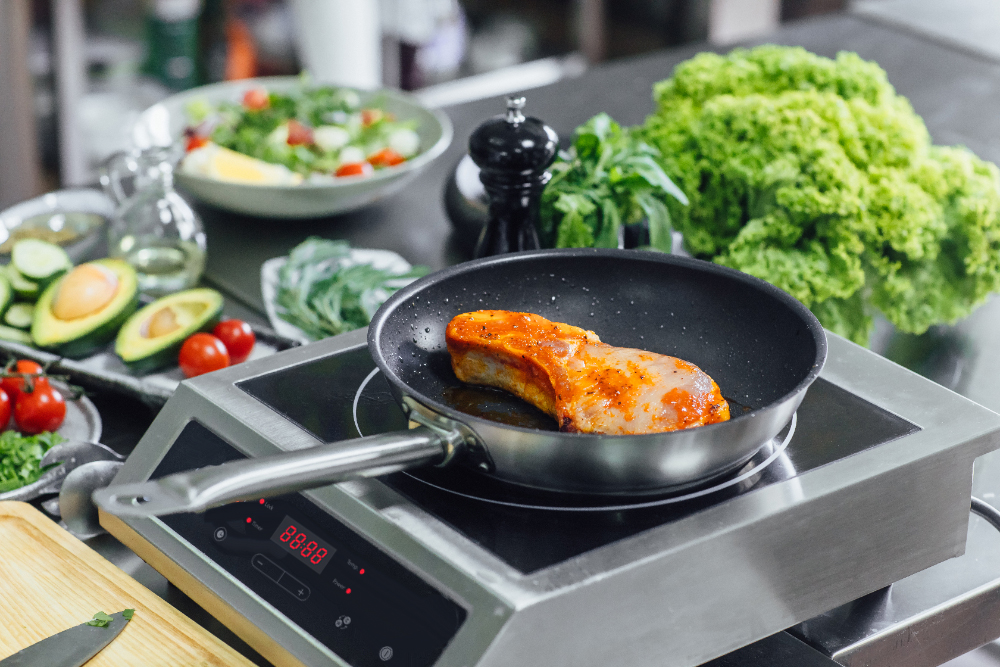
The cost comparison between built-in induction and ceramic cookers can be confusing for many home cooks. When considering a new cooking appliance, buyers often wonder about price differences, energy efficiency, and maintenance needs. Induction cookers use electromagnetic energy, which makes them faster and more efficient than ceramic cookers. However, ceramic cookers are usually more affordable upfront and simple to install. Understanding these factors can help you make an informed choice.

In summary, built-in induction cookers typically cost more upfront but offer better energy efficiency and faster cooking times. **Ceramic cookers are cheaper to purchase but may result in higher energy bills over time**.
Built-in induction cookers usually range from $1,000 to $2,500, depending on the brand and features. Ceramic cookers, on the other hand, generally cost between $300 and $1,000.
Induction cookers might require special installation, especially if electrical upgrades are needed. This can add $200 to $500 to your total costs. Ceramic cookers have simpler installations, usually costing $100 to $300.
Induction cookers are more energy-efficient. They use about 30% less energy than ceramic cookers. This efficiency translates to savings of roughly $20 to $80 per year on electricity bills.
Induction cookers often have higher repair costs due to their complex components. Maintenance can cost between $100 and $400 if something goes wrong. Ceramic cookers, with fewer components, usually have lower maintenance costs, averaging around $50 to $200.
Induction cookers tend to hold their value better due to their popularity and efficiency. You might recoup about 70% of your investment after a few years. Ceramic cookers, however, typically depreciate faster, with resale values around 50-60% of the purchase price.
In conclusion, when considering the cost comparison of built-in induction and ceramic cookers, upfront costs are just the beginning. While induction cookers are more expensive, they offer long-term savings through energy efficiency. Ceramic cookers, while cheaper to buy and install, may lead to higher energy costs over time. Weigh your cooking habits and budget to find the cooker that best fits your needs.
1. Which cooker heats up faster? Induction cookers heat up faster than ceramic cookers due to their technology.
2. Are induction cookers harder to clean? No, induction cookers are easier to clean since spills don't burn onto the surface.
3. Do I need special cookware for induction cookers? Yes, induction cookers require magnetic cookware to work correctly.
4. Can I install a ceramic cooker myself? Yes, ceramic cookers are easier to install and may not require professional help.
5. How long do these cookers last? Both induction and ceramic cookers can last up to 10 to 15 years with proper care.
6. What is the most energy-efficient option? Induction cookers are generally more energy-efficient than ceramic cookers.