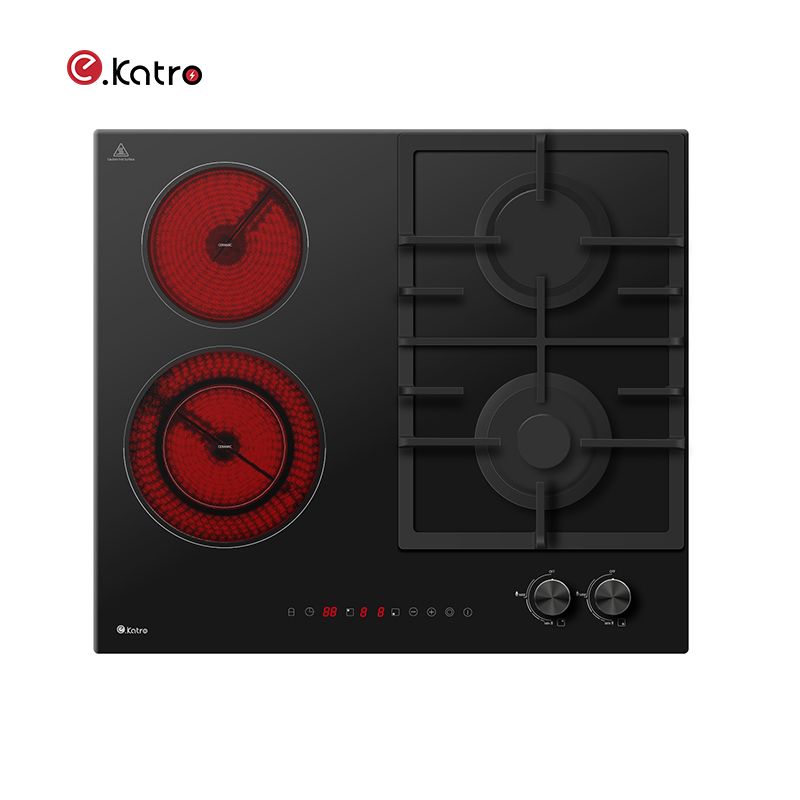
The culinary landscape has rapidly evolved with the introduction of innovative kitchen appliances. Among these advancements, the Built-in Induction Cooker glass panel stands out, enhancing efficiency and aesthetics in modern kitchens. These cookers utilize advanced technology, blending seamless design with enhanced cooking capabilities, thus addressing common issues like uneven heating and safety concerns. With increasing urbanization and a surge in smaller living spaces, these induction cookers provide a compact solution for meal preparation without compromising on performance.
This article will delve into what makes built-in induction cookers unique, how to choose the best materials for glass panels, and their various applications in today's kitchens.
A built-in induction cooker is a cooking appliance that uses electromagnetic fields to heat cookware directly, rather than the cooktop itself. This results in efficient cooking, with heat being generated directly in the pot or pan. Key industry terms associated with built-in induction cookers include induction heating, electromagnetic induction, and thermal efficiency.
The thermal efficiency of these cookers is noteworthy. According to a study by the American Society of Heating, Refrigerating and Air-Conditioning Engineers (ASHRAE), induction cookers can achieve up to 90% efficiency, compared to around 70% for traditional electric cooktops. This significant difference translates into faster cooking times and reduced energy consumption, making induction cookers an economical choice for modern households.
Built-in induction cookers are versatile and can be found in various settings, including:
Considering these applications, built-in induction cookers meet diverse cooking needs while optimizing both energy consumption and cooking time.
The adoption of built-in induction cookers presents multiple advantages that elevate the cooking experience:
Speed: They heat up faster than traditional cooking methods. Testing shows that an induction cooker can boil water in approximately 4 minutes, whereas gas stoves can take up to 10 minutes for the same task.
Safety: Unlike gas or electric stoves, induction cookers remain cool to the touch, minimizing burn risks. Reports indicate a 40% decrease in kitchen injuries related to cooking.
Easy Maintenance: The flat glass panel is easier to clean, as spills don’t burn onto the surface. In fact, a study by Consumer Reports suggests that cleaning induction cooktops can be 50% faster than traditional ranges.
Energy Efficiency: With less wasted heat, built-in induction cookers significantly reduce energy costs. It has been noted that homes using cooking appliances with over 90% energy efficiency can save up to $100 annually on energy bills.
These benefits make built-in induction cookers not only a luxurious option but a practical transformation in cooking technology.
If you're intrigued by the advantages of built-in induction cookers and wish to explore this technology further, consider reading the user guides available for brands like Katro. They offer comprehensive insights into maximizing the benefits of your induction cooker, including the best materials for constructing the glass panel.
Selecting the right materials for glass panels is crucial for durability and performance. Materials such as tempered glass provide excellent thermal resistance and are less prone to cracking, enhancing the longevity of your cooker.
Embedding this advanced cooking technology into your home can significantly upgrade your culinary experience. Opt for a built-in induction cooker that not only meets your cooking needs but also complements your kitchen's aesthetic.
A: Tempered glass is recommended due to its excellent thermal resistance and durability, which minimizes the risk of cracking.
A: Built-in induction cookers can achieve up to 90% efficiency, significantly higher than the approximately 70% efficiency of traditional electric cooktops, leading to reduced energy consumption.
A: Key advantages include faster cooking times, enhanced safety due to cooler surfaces, easier maintenance, and overall energy efficiency.
A: Yes, built-in induction cookers are commonly used in restaurants for their speed and precision, making them suitable for high-paced cooking environments.
A: Katro offers various models of built-in induction cookers designed for both residential and commercial use, each featuring high thermal efficiency and modern aesthetic designs for optimal cooking performance.