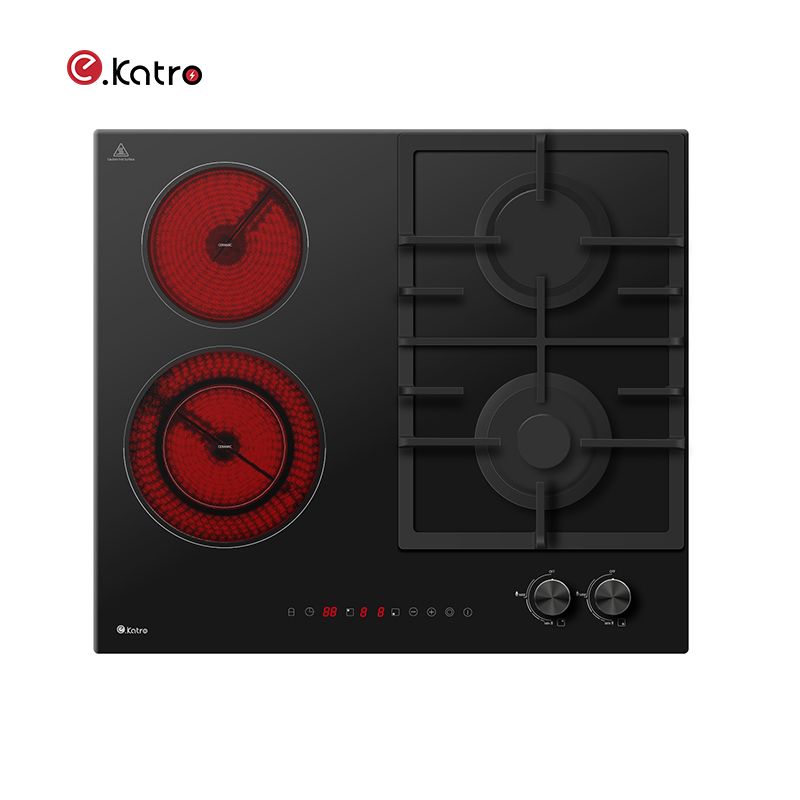
When looking to enhance culinary efficiency and safety, Portable Induction Cookers emerge as revolutionary kitchen appliances. These compact devices utilize electromagnetic energy to directly heat pots and pans, significantly improving cooking speed and energy efficiency. Unlike traditional stovetops, portable induction cookers deliver heat precisely where it’s needed, allowing for faster task completion and a more enjoyable cooking process. The simplicity of operation combined with advanced features reflects their immense value in both home and professional kitchens.
The inception of induction cooking can be traced back to the late 19th century, but it wasn't until the 20th century that portable induction cookers became commercially viable. With rising energy costs, there has been a marked shift from gas and electric stoves to induction technology. This transition is supported by recent data showing that portable induction cookers can be up to 90% energy efficient compared to traditional gas stoves, which typically reach only 40% efficiency. The industry has seen sustained growth, with a projected compound annual growth rate (CAGR) of 9.3% for induction cooktops from 2020 to 2027.
One of the primary practical applications for portable induction cookers is their mobility. Ideal for small kitchens, outdoor cooking, or even temporary setups in events, they allow users to enjoy gourmet cooking without being tied down to a full-size range. Their safety features, including automatic shut-off and cool-to-touch surfaces, make them particularly attractive to families or novice cooks. These cookers also provide precise temperature control, enabling users to achieve culinary results that may be challenging on traditional stoves.
Nevertheless, common misconceptions arise around the capabilities and maintenance of portable induction cookers. A prevalent error is assuming that all cookware is compatible, when in fact, only ferrous materials that contain iron are suitable for induction cooking. Additionally, some buyers mistakenly believe that induction cookers are less powerful; however, many models can deliver up to 1800 watts of power, allowing for rapid heating and cooking similar or even superior to gas stovetops.
Consider the case of a family of five who transitioned from a gas stove to a Katro portable induction cooker. Initially skeptical, they reported a 30% decrease in energy bills within the first month, thanks to induction cooking. They also noted faster meal preparation times and a safer cooking environment, especially with children nearby. This anecdote underscores the tangible benefits of adopting portable induction cookers for everyday use.
In conclusion, the insights derived from reviewing portable induction cooker FAQs reveal a wealth of practical knowledge for potential buyers. The integration of precise technology, substantial energy savings, and heightened safety features positions these appliances as essential kitchen tools. With an increasing number of individuals shifting to induction cooking, exploring options such as the Katro portable induction cooker warrants serious consideration. For anyone on the fence, understanding these portable induction cooker FAQs will facilitate informed purchasing decisions and ultimately enhance the culinary experience.
A: Portable induction cookers enhance culinary efficiency and safety by providing precise heat directly where it's needed, leading to faster cooking times and significant energy savings, up to 90% more efficient than traditional gas stoves.
A: Only ferrous materials that contain iron are suitable for induction cooking. Ensure your cookware is labeled as induction-compatible to achieve optimal cooking performance.
A: Portable induction cookers reach energy efficiencies of up to 90%, whereas traditional gas stoves typically operate at around 40% efficiency, resulting in significant cost savings on energy bills.
A: Yes, many portable induction cookers deliver up to 1800 watts of power, allowing for rapid heating and cooking speeds comparable to or even superior to traditional gas stoves.
A: Portable induction cookers include features like automatic shut-off and cool-to-touch surfaces, making them ideal for families and novice cooks, ensuring a safer cooking environment.