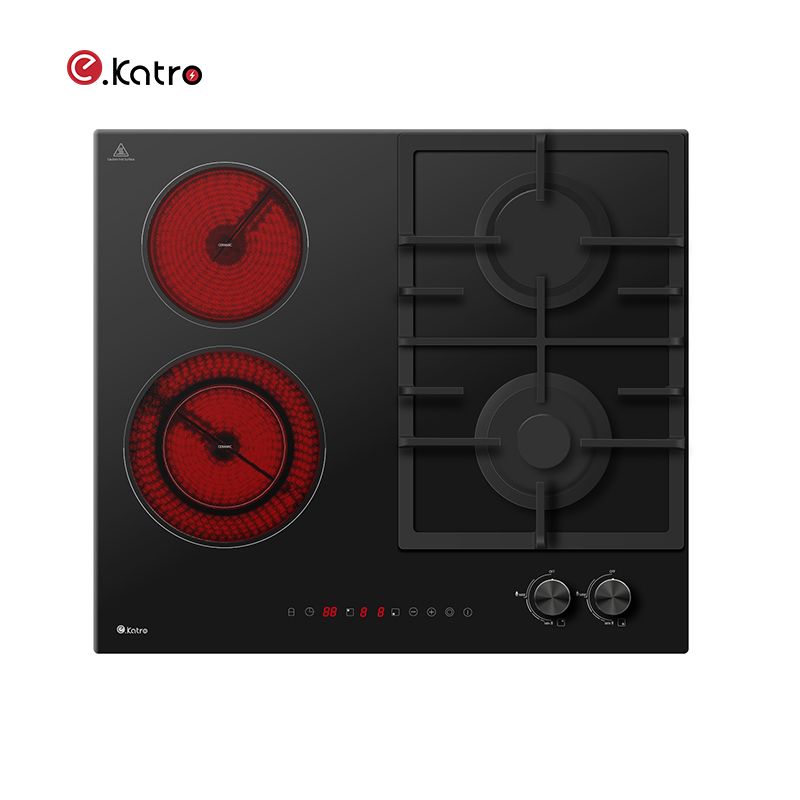
Induction and ceramic cookers are popular choices in modern kitchens. Many people struggle to choose between them. Understanding the key differences between induction cookers and ceramic cookers can help you make the right decision. While both types may seem similar, they operate quite differently. An induction cooker uses electromagnetic heat, while a ceramic cooktop relies on radiant heat. This article will break down these differences in detail.

**Induction cookers cook food faster and more efficiently using magnetic fields, while ceramic cookers use radiant heat and take longer to reach cooking temperatures.** The choice between them may depend on your cooking style and preferences.
Induction cookers create a magnetic field to heat pots and pans directly. This method is fast and energy-efficient. On the other hand, ceramic cookers use electric coils to produce radiant heat. This method heats the cookware and then transfers heat to the food.
Induction cookers can typically heat pans to cooking temperatures in under a minute. Comparatively, ceramic cookers take longer, usually several minutes. This difference may affect meal preparation time, especially on busy nights.
Induction cookers are more energy-efficient because they only heat the cookware. Ceramic cookers lose heat in the process, making them less efficient. Studies show that induction cookers can save up to 50% more energy than ceramic options.
Induction cookers are safer as they remain cool to the touch. They only heat metal cookware placed on them. Ceramic cookers can become hot to the touch, which poses a burn risk.
Induction cookers are generally easier to clean since spills cool quickly and do not cook onto the surface. Ceramic cookers can be harder to clean as spilled food may bake onto the surface, requiring more scrubbing.
Induction cookers usually have a higher upfront cost than ceramic cookers. However, they can be more cost-effective in the long term due to their efficiency and faster cooking times.
In summary, induction and ceramic cookers have distinct differences that are essential to consider before making a choice. The main factors include heating methods, cooking speed, energy efficiency, safety features, maintenance, and cost. Understanding these key differences helps make an informed decision. Ultimately, choosing the right cooker depends on your personal cooking style and preferences.
1. Do induction cookers require special cookware?
Yes, induction cookers require magnetic cookware, such as those made of cast iron or stainless steel.
2. Are ceramic cookers compatible with all types of cookware?
Yes, ceramic cookers can be used with any type of cookware.
3. Which cooker is better for quick meals?
Induction cookers are better for quick meals due to their rapid heating capabilities.
4. Is it safe to use induction cookers with children around?
Yes, induction cookers are generally considered safer as they do not get hot unless cookware is placed on them.