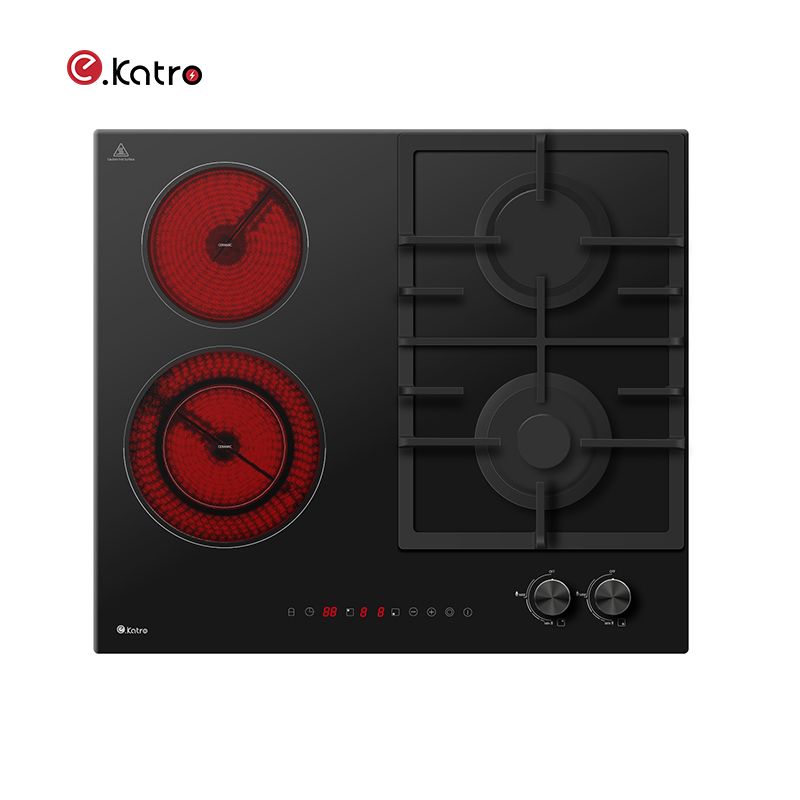
In the modern kitchen, choosing the right cooking appliance can significantly enhance your cooking experience. Among the top contenders are built-in induction cookers and ceramic cookers. Built-in induction cookers are rapidly gaining popularity, primarily due to their efficiency and speed. Many home cooks and professional chefs alike face pain points like uneven heating, slow cooking times, and energy inefficiency with traditional methods. Understanding the nuances between a built-in induction cooker and a ceramic cooker can lead to a more enjoyable cooking experience and optimal culinary results.
For instance, induction cookers are known for their rapid heating capabilities, boasting an impressive 90-95% energy efficiency compared to about 65% for traditional ceramic cookers, making them a superior choice for energy-conscious consumers. This article will delve into what these cookers are, where they are used, their advantages, and guide you on how to make an informed decision for your kitchen.

When comparing built-in induction cookers vs. ceramic cookers, it's essential to first define what each appliance is. A built-in induction cooker uses electromagnetic fields to heat cookware directly, ensuring a more consistent and efficient cooking process. On the other hand, ceramic cookers rely on radiant heat and conduction to cook food, which can lead to slower heating times and uneven cooking.
The terminology surrounding these products can be crucial. "Induction" refers to the process of heating via electromagnetic energy, while "ceramic" denotes the material composition of the cooktop surface. Many users may find the scientific principles behind these technologies fascinating, especially when it comes to food safety and energy use.
Both built-in induction and ceramic cookers have their unique applications in various kitchen environments.
Built-in Induction Cookers: Due to their sleek design and efficiency, these cookers are ideal for modern kitchens, particularly in homes that embrace contemporary aesthetics. They are frequently used in gourmet restaurants where precision and speed are paramount. Furthermore, their ability to boil water significantly faster—taking as little as 2-3 minutes for a liter compared to 10-15 minutes with a ceramic cooker—makes them a favorite among busy chefs.
Ceramic Cookers: While somewhat outdated, these cookers are still prevalent in casual cooking environments. Their appeal lies in their compatibility with a wide range of cookware materials, making them a versatile option. However, they may not be as preferred for high-temperature cooking, which can limit their adaptability in professional settings.
Understanding the benefits of built-in induction cookers vs. ceramic cookers can help users make informed decisions:
Built-in Induction Cookers: One of the most significant advantages is their rapid heating capability, allowing users to achieve high temperatures quickly. They can also provide precise temperature control, reducing the risk of overcooking and allowing for delicate tasks like melting chocolate with a measured increase in temperature—typically around 1-2 degrees per minute. The safety aspect cannot be overlooked, as induction cookers remain cool to the touch, vastly decreasing burn risks.
Ceramic Cookers: Despite their limitations, ceramic cookers are easy to clean and maintain, primarily due to their flat surfaces. They can handle a variety of cookware types, including glass and metal, providing flexibility in cooking. For casual cooking scenarios, this adaptability can be a compelling advantage.
As you consider your options between a built-in induction cooker and a ceramic cooker, the choice ultimately depends on your cooking needs and preferences. Remember to explore user guides that come with these products to maximize their effectiveness. If you’re intrigued by the benefits of induction cooking, consider trying out brands like Katro for reliable performance and advanced features.
By understanding the differences and applications of built-in induction cookers vs. ceramic cookers, you can enhance your kitchen experience and elevate your culinary skills.
A: Built-in induction cookers use electromagnetic fields to heat cookware directly, offering rapid heating and high energy efficiency (90-95%). Ceramic cookers rely on radiant heat and conduction, resulting in slower heating times and lower energy efficiency (approximately 65%).
A: Built-in induction cookers are ideal for modern kitchens due to their sleek design and efficiency, complementing contemporary aesthetics.
A: Induction cookers provide rapid heating, precise temperature control, and remain cool to the touch, reducing burn risks and improving overall cooking efficiency.
A: Ceramic cookers are easy to clean and maintain, primarily due to their flat surfaces, making them suitable for casual cooking environments.
A: Katro offers reliable performance and advanced features in their built-in induction cookers, making them a recommended choice for those interested in induction cooking.