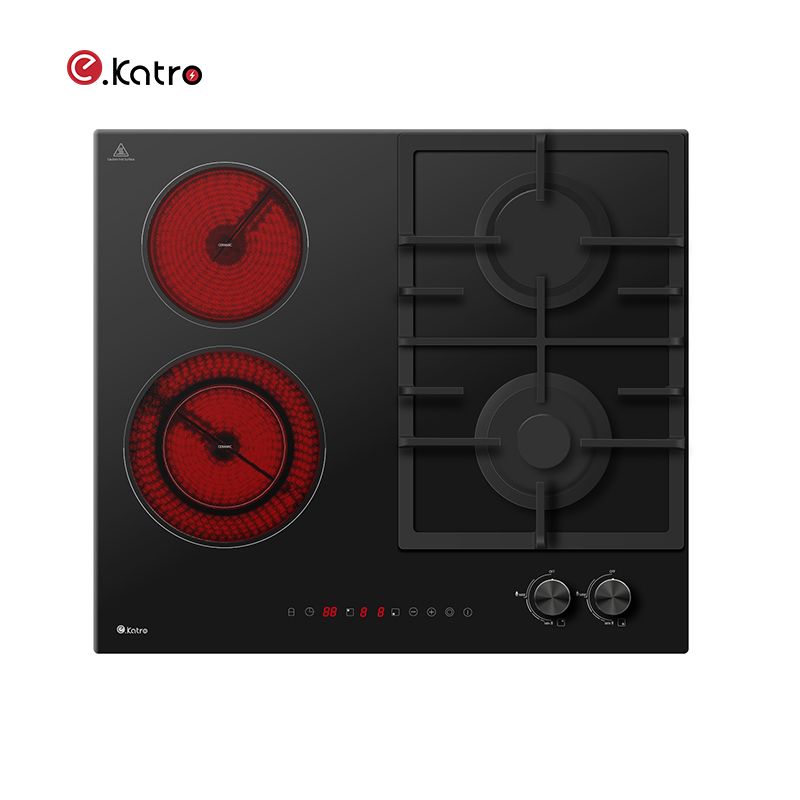
A Built-in Induction Cooker turns a kitchen worktop into a clean, integrated cooking area without using an exposed gas flame. It is suitable for modern apartments, villas, hotels, serviced apartments, and compact commercial kitchens. Buyers looking for a built-in induction cooker for modern kitchens should evaluate more than appearance. Heating power, pan compatibility, electrical load, ventilation, safety testing, installation size, and after-sales support all affect the final result. This guide explains how the technology works, where it fits, how to compare suppliers, and how to avoid costly installation or quality problems.

A Built-in Induction Cooker is an electric hob installed into a cutout in the countertop. Instead of heating a metal coil or an open flame, it uses an induction coil to create a changing magnetic field. When a compatible ferromagnetic pan is placed on the glass surface, the magnetic field produces electrical currents inside the pan. The pan then generates heat directly.
The key industry terms are easy to understand:
Most residential models use two, three, or four zones. Typical rated input power ranges from approximately 2.8 kW for compact two-zone products to 7.4 kW for four-zone models. A 7.4 kW model connected to a 230 V supply can draw about 32 A at full load, so the electrical circuit must be planned before purchase.
The value of induction cooking becomes clearer during daily use. A gas burner can heat the room, create combustion products, and leave a raised pan support that is difficult to wipe. A traditional electric hob may take longer to transfer heat because the heating element first becomes hot and then transfers energy through the cookware.
Induction reduces this indirect heating process. Commonly cited U.S. Department of Energy test estimates place induction cooking efficiency near 84%, compared with about 74% for conventional smooth-top electric cooking and about 40% for gas cooking. Actual results vary with pan size, food volume, power setting, and cooking habits, but the comparison explains why induction can reduce wasted heat.
The smooth glass surface also supports faster cleaning. Spilled food is less likely to burn onto a cold surface because the pan creates most of the heat. However, the glass can still become hot through contact with the pan, so users should wait for the residual heat indicator to switch off before wiping the surface.
For households that need an energy-efficient built-in induction cooktop, the main advantages are measurable:
At first, induction cooking was strongly associated with home kitchens. As installation quality and electronic control improved, its use expanded into other fields.
Four-zone models are common in family kitchens. A practical configuration may include two 1.8 to 2.0 kW zones, one 2.2 to 2.4 kW zone, and one high-power zone of 2.8 to 3.7 kW. Some products include a temporary boost function that raises one zone above its standard rating for boiling or high-temperature searing.
Because the total rated load can exceed the available household circuit, a power-management function is important. For example, a cooker may temporarily reduce one zone from 2.0 kW to 1.4 kW when another zone uses a 3.0 kW boost. Buyers should confirm how this function behaves instead of assuming that every zone can operate at maximum power at the same time.
Hotels often prefer induction because there is no open flame in the guest room and the surface is easier to standardize. Compact two-zone units can suit studio apartments, while four-zone models are better for extended-stay rooms and shared kitchens.
For hospitality projects, the buyer should review continuous operating tests, touch-control durability, spare-part availability, and cleaning resistance. A product that works well in a private home may not withstand repeated daily use across dozens of rooms.
Portable induction units are common in professional kitchens, but built-in models can be used in buffet stations, demonstration kitchens, banquet preparation areas, and compact food-service counters. Commercial buyers should check whether the product is designed for domestic or professional duty. A domestic 3.5 kW unit should not be marketed as a commercial appliance without supporting test records and thermal data.
Induction is useful where ventilation, fire safety, and space are limited. A two-zone model may fit a compact countertop, but marine or mobile applications require additional checks for vibration, moisture, voltage fluctuation, and mounting stability. Standard residential certification alone may not cover every special environment.
Product appearance is easy to compare, but technical specifications determine whether the cooker will work safely in the target market.
| Parameter | Common Range or Requirement | Why It Matters |
|---|---|---|
| Rated voltage | 220–240 V in many markets; 110–120 V in some regions | Must match the local electrical supply. |
| Total rated power | 2.8–7.4 kW for many residential models | Determines cable size, breaker rating, and power-management needs. |
| Number of zones | 2–5 zones | Defines cooking capacity and countertop size. |
| Control levels | Usually 9–15 levels, plus boost | More levels allow finer temperature and power control. |
| Glass thickness | Often about 4 mm, depending on the design | Influences impact resistance, heat distribution, and appearance. |
| Cutout size | Common four-zone cutouts are approximately 560 × 490 mm, but models vary | Incorrect measurements can prevent installation. |
| Timer range | Commonly 1–99 minutes | Useful for unattended simmering and automatic shutoff. |
| Noise level | Depends on the cooling fan and load; supplier test data should be requested | Important for open-plan homes and hotel rooms. |
Do not compare only the maximum wattage. A high-power model may boil water quickly, but it may also require a dedicated 32 A circuit. A model with lower total power and effective power sharing may be more suitable for an apartment with limited electrical capacity.
Installation should begin with the countertop, not the appliance box. Measure the product body, cutout length, cutout width, countertop thickness, corner radius, clearance below the glass, and ventilation opening. The product manual must be treated as the final reference because two cookers with the same external width can use different cutout dimensions.
A safe installation plan normally checks the following points:
Never place a sealed drawer directly under the cooker if it blocks the cooling path. If a drawer is allowed by the manufacturer, it may need a minimum clearance or a protective panel. These details are small, but they prevent overheating and accidental contact with the appliance underside.
Reliable sourcing requires documented testing rather than verbal promises. For household cooking appliances, buyers commonly request evidence related to IEC 60335-1 and IEC 60335-2-6, which cover general appliance safety and household cooking ranges, hobs, ovens, and similar products. Electromagnetic compatibility is commonly assessed through standards such as CISPR 14-1 and CISPR 14-2 or their regional equivalents.
Depending on the destination market, the supplier may also need to provide documentation for CE, UKCA, UL, ETL, CB Scheme, or other conformity systems. The exact requirement depends on the sales country and product configuration.
A useful factory quality plan should include:
For a private-label project, buyers should request the inspection frequency and acceptance criteria. A reasonable quality agreement may define cosmetic defects, allowable scratch length, carton damage limits, electrical test records, and the sampling level for outgoing inspection. Many factories use ISO 2859-1 sampling plans, but the chosen AQL level should be written into the purchase contract rather than assumed.
The right questions reveal whether a supplier understands product engineering or is only reselling a catalogue model. Before placing an order, ask:
During sample approval, test the product with at least three cookware types: a flat stainless-steel pan, a cast-iron pan, and a pan that is known to be incompatible. Check startup time, pan detection, power changes, fan noise, display accuracy, and automatic shutoff. Record the results in a sample approval form. This creates a reference for mass production.
Supplier selection should follow a staged process. First, define the market, voltage, number of zones, power limit, cutout size, certifications, control language, packaging requirements, and target price. Next, shortlist suppliers that can provide technical files rather than only product photographs.
After that, request a sample and inspect it under normal and maximum-load conditions. Measure the actual body size with a caliper, check the cable and plug configuration, inspect the glass edges, and compare the label with the test documents. If a supplier states that the product has a 7.4 kW rating, verify the current draw and the power-management behavior.
For customized products, allow time for engineering validation. A new glass design may require artwork proofing, printing tests, heat-cycle tests, and surface inspection. A revised control panel may require software testing for every touch function. A supplier with documented development records, controlled firmware versions, and traceable batch numbers can reduce repeat defects during production.
Katro can be considered when buyers want to discuss built-in induction cooking solutions, private-label development, product configuration, and sourcing support. The final supplier decision should still be based on verified samples, certification documents, inspection results, commercial terms, and service capacity.
Correct use protects both the glass surface and the electronic system. Use cookware with a flat base that matches the zone diameter. A pan that is too small may activate poorly, while a pan that is too large can create uneven heating. Do not slide cast-iron cookware across the glass because its rough base can cause scratches.
Clean the surface after it has cooled. Remove sugar, syrup, plastic, and foil quickly if they melt onto the glass, following the user manual. Avoid abrasive powder, steel wool, and strong chemicals that can damage the printed markings or surface finish.
Keep the air inlet and outlet clear. If the cooling fan becomes unusually loud, the cooker displays repeated overheating errors, or the power repeatedly decreases during normal use, stop operation and arrange a qualified inspection. Do not open the appliance while it is connected to the mains.
Users should also understand the residual heat indicator. Even when the induction field has stopped, the pan can transfer heat back to the glass. The warning may remain visible until the surface temperature falls below the product’s programmed safety threshold.
Before approving a purchase, confirm the following:
A Built-in Induction Cooker is not simply a black glass panel with touch buttons. It is a coordinated system of coils, power modules, sensors, cooling parts, software, glass, wiring, and safety controls. When buyers compare measured power, installation data, test records, and service terms, they can select a product that performs consistently after installation. The next step is to review the user guide, confirm the electrical and countertop requirements, test a sample, and contact Katro for further product understanding or a practical trial of a suitable how to source a built-in induction cooker solution.
A: When sourcing a built-in induction cooker, consider specifications such as rated voltage, total power, number of cooking zones, control levels, and cutout dimensions to ensure compatibility with your countertop and electrical system.
A: Yes, we can provide documentation related to IEC 60335-1 and IEC 60335-2-6 for safety, as well as evidence of electromagnetic compatibility testing as per CISPR standards, ensuring our products meet safety and quality standards.
A: The minimum order quantity for customized built-in induction cookers depends on various factors, including design changes and specific configurations. Please contact us for detailed information on your requirements.
A: To ensure compatibility, confirm that your cookware is ferromagnetic and matches the diameter of the cooking zones. We can provide guidance on suitable cookware materials.
A: We offer comprehensive after-sales support, including warranty services, spare parts availability, and technical assistance to ensure your induction cookers operate efficiently and meet your expectations.