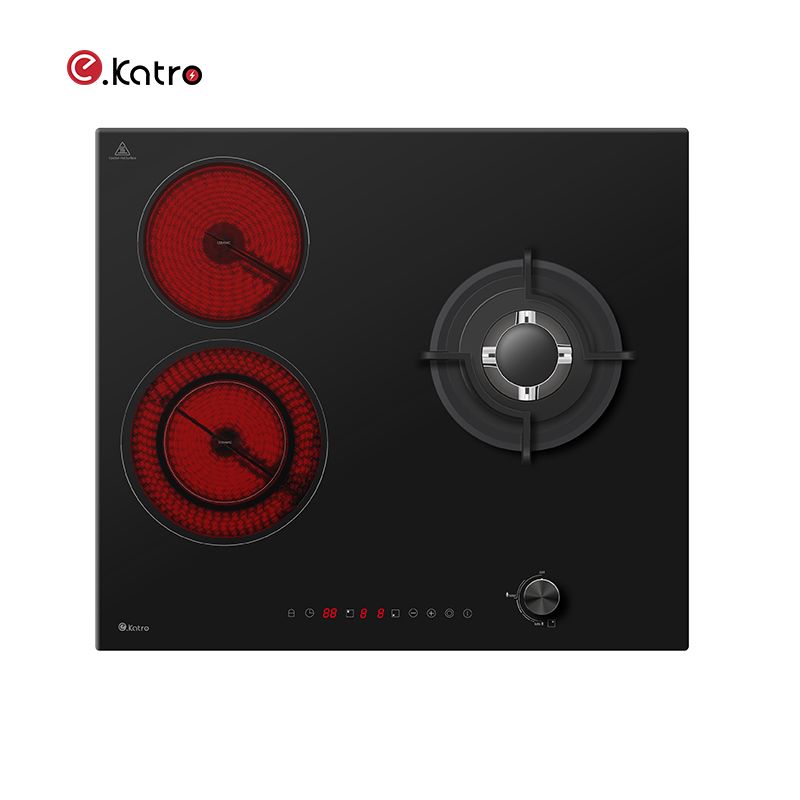
In today's fast-paced world, home cooks face numerous challenges when it comes to meal preparation. Time constraints, energy efficiency, and safety concerns are at the forefront of their minds. For instance, traditional cooking methods often lead to uneven heating and lengthy cooking times, which can be frustrating. Enter the built-in induction cooker, a game-changer in smart kitchens. These modern appliances provide a seamless cooking experience with precise temperature control, quick heating, and enhanced safety features, eliminating many common pain points. Imagine effortlessly preparing gourmet meals in a fraction of the time while ensuring an energy-efficient kitchen environment—this is the reality that a built-in induction cooker delivers.
One of the primary benefits of built-in induction cookers is their remarkable energy efficiency. According to industry research, induction cooking is approximately 85-90% efficient, compared to gas and electric methods, which typically hover around 40-55% efficiency. This significant difference not only contributes to lower energy bills but also aids in reducing overall carbon footprints, making this appliance a smart choice for environmentally-conscious consumers. Moreover, a study highlighted by the U.S. Department of Energy indicates that homes using induction cookers can experience a reduction in cooking time by up to 50%, further minimizing energy usage.
In terms of safety, built-in induction cookers outperform traditional cooking methods. With no open flames and surfaces that cool down quickly, the likelihood of burns and kitchen fires is substantially reduced. A report from the National Fire Protection Association elucidates that failure to clean cooking equipment is a leading cause of kitchen fires in the U.S., accounting for approximately 49% of residential fire incidents. By using an induction cooker, homeowners significantly mitigate this risk, providing peace of mind during meal preparation.
When considering the practicality of induction versus conventional cooking, the differences become strikingly clear. For instance, while gas stoves may require users to wait several minutes for water to boil, induction cooktops can accomplish this in as little as two minutes. This rapid heating potential is a key selling point for busy families and professionals who rely on efficient cooking and fast meal prep. To illustrate, a simple test shows that boiling a liter of water takes about 4 minutes on average using gas but only about 1.5 minutes with induction. This speed translates not just to convenience but also to significant time savings for those with hectic schedules.
Additionally, induction cooking provides unparalleled precision. For instance, chefs appreciate the ability to set temperatures to within a degree, enabling them to achieve perfect results every time. A survey conducted by Katro among professional chefs revealed that 92% noted improved cooking consistency with induction cookers, reinforcing their capacity to elevate culinary skills without the hassle of monitoring flames or adjusting knobs manually.
A comparative analysis of traditional cooking methods against induction highlights not only the advantages but the potential drawbacks of avoiding modern technology. Where gas and electric stove tops create hot spots and uneven cooking environments, an induction cooker delivers smooth, uniform heat across the entire cooking surface. For those who prioritize culinary accuracy and energy conservation, the choice is unmistakable. Built-in induction cookers have also become a favored feature in smart kitchens, integrating seamlessly with home automation systems.
In summary, the built-in induction cooker stands out as a revolutionary kitchen appliance, addressing numerous user challenges head-on. With remarkable energy efficiency, enhanced safety, rapid cooking capabilities, and unparalleled precision, these cookers align beautifully with the modern homeowner's needs in today’s fast-paced lifestyle. The value proposition is clear: invest in a built-in induction cooker like the models offered by Katro, and transform your cooking experience forever. For those interested in exploring this innovative technology further or trying it firsthand, considering Katro's extensive line of induction cookers could be your first step toward a smarter, more efficient kitchen.
//image.chukouplus.com/upload/C_5421/file/20250219/d6f4aa85a937e4ba00a0d10ce0c40445.jpeg
A: Built-in induction cookers offer precise temperature control, rapid heating, and enhanced safety features, addressing common issues like uneven heating and lengthy cooking times found in traditional methods.
A: Induction cooking is approximately 85-90% efficient, significantly higher than gas and electric methods, which typically range from 40-55% efficiency, leading to lower energy bills and reduced carbon footprints.
A: Induction cookers eliminate open flames and have surfaces that cool down quickly, reducing the risk of burns and kitchen fires, thereby enhancing safety during meal preparation.
A: Induction cookers can boil a liter of water in about 1.5 minutes, compared to approximately 4 minutes with gas stoves, offering significant time savings for busy individuals.
A: When choosing a built-in induction cooker, consider energy efficiency, safety features, cooking speed, and compatibility with home automation systems to ensure it meets your culinary and technological needs.